Home / Learn / Water Stain Under a Vent Pipe
A brown ring on an upstairs ceiling or in a bathroom, directly below where a plumbing vent pipe comes through the roof, is almost always a cracked pipe boot — the rubber collar that seals that pipe. It is the single most common roof leak we get called about, it is cheap to fix now, and it quietly rots your decking if you leave it. Our price is $700 for the first boot, $405 for each additional one on the same visit.
By the time a stain shows on a ceiling, water has already been through the roof, across the top of the drywall, and sat there long enough to pull the colour out of the paper. The leak is older than the mark. That is why the mark is usually small and the sheathing above it usually isn’t.
The stain also tends to be in the wrong place. Water comes through the roof at the pipe, lands on the top of the ceiling, and then runs along a joist or a wire until something stops it. A stain two feet from the pipe is still the pipe. This is the single most common reason homeowners patch the wrong thing — they chase the mark instead of the penetration.
One useful test: a pipe boot leak is almost always rain‑driven and intermittent. It shows up during or just after a hard rain, especially wind‑driven rain, and does nothing in a drizzle. If your stain appears in February with no rain at all, you are probably looking at an ice dam or condensation instead, and the fix is a different one.
A pipe boot is a rubber gasket on a metal flange. The shingles are woven over the flange, and the rubber grips the pipe. Everything about that is fine except the rubber.
Ultraviolet light is what kills it. The rubber hardens, shrinks away from the pipe and splits — usually on the south and west slopes first, because that is where the afternoon sun sits.
Our winters work the split open. Water gets into a hairline crack, freezes, expands, and makes the crack bigger. Thirty cycles a year does real damage to tired rubber.
A thirty‑year shingle sits over a boot whose rubber gives out in ten to fifteen. Which is why a roof in good shape can still have a leaking penetration, and why one leak doesn’t mean you need a roof.
There is a second, meaner version of this. Someone has already been up there and put a bead of caulk or roof cement around the pipe. That buys a season or two, and then the caulk cracks along exactly the same line the rubber did, except now the water runs in behind a black smear nobody can see from the ground. If you have had the same stain come back twice, that is usually what happened.

Repairs here come off a flat‑rate book, so the number doesn’t depend on how long the job takes us or on how worried you sounded on the phone.
Boot off, shingles opened above and below, new boot set, shingles woven back in. Not caulked.
Cheaper because the setup is already paid for. Most houses have two to four vent pipes and they age together.
On a walkable roof. More on a steep or very steep one, because it’s slower and takes more gear. Waived if the visit turns into a roof.
Decking, if the sheathing under the boot has already gone soft, and your ceiling — drywall and paint aren’t our trade. Both get photographed and priced before anybody starts.
If you have four tired boots, it is worth doing them all on the one visit. Four boots done together is $700 plus three at $405 — $1,915 — against $2,800 if you let us come out four separate times over four years. We would rather tell you that now than bill you for the second trip.
Every price we charge is on one page: see our full price card →
A pipe boot leak is small, slow and completely survivable for a while. That is exactly what makes it expensive — nothing forces you to deal with it.
A ring on the ceiling that dries out between storms. The sheathing around the pipe is damp after rain and dries again. Nothing is lost yet.
The plywood around the penetration stays wet long enough to delaminate. Press on it from the attic and it gives. Now the repair includes a sheet of decking.
Wet batts don’t insulate and don’t dry in a cold attic. You start paying for it in heat as well as in repair, and mould becomes a real conversation.
Rot reaches the rafter or truss top chord next to the pipe. That is a carpentry job, not a roofing one, and it costs multiples of the boot.
None of that is a scare tactic and none of it happens fast. It is just the order things go in. Deal with it in year one and it is $700.
A new boot on a twenty‑two‑year‑old roof with bare granules and curling edges is $700 you spend twice. If that is what we find, we will say so, show you the photographs, and give you a written replacement number at the same visit — and you are free to do nothing with it. The visit fee comes off if you do replace the roof. We would rather lose a $700 repair than sell you one we know won’t hold.
It cuts the other way too. If the roof has plenty of life in it, the boot is the whole problem and a boot is the whole fix. You do not need a roof because one penetration failed, and anybody telling you otherwise on the strength of one ceiling stain is selling. Our own signs you need a new roof guide lists what actually warrants replacement — one leak at a pipe isn’t on it.
On the roof first: every penetration, the boots, the flashings, the valleys. Then the attic, where the stain on the sheathing tells you where water actually came in.
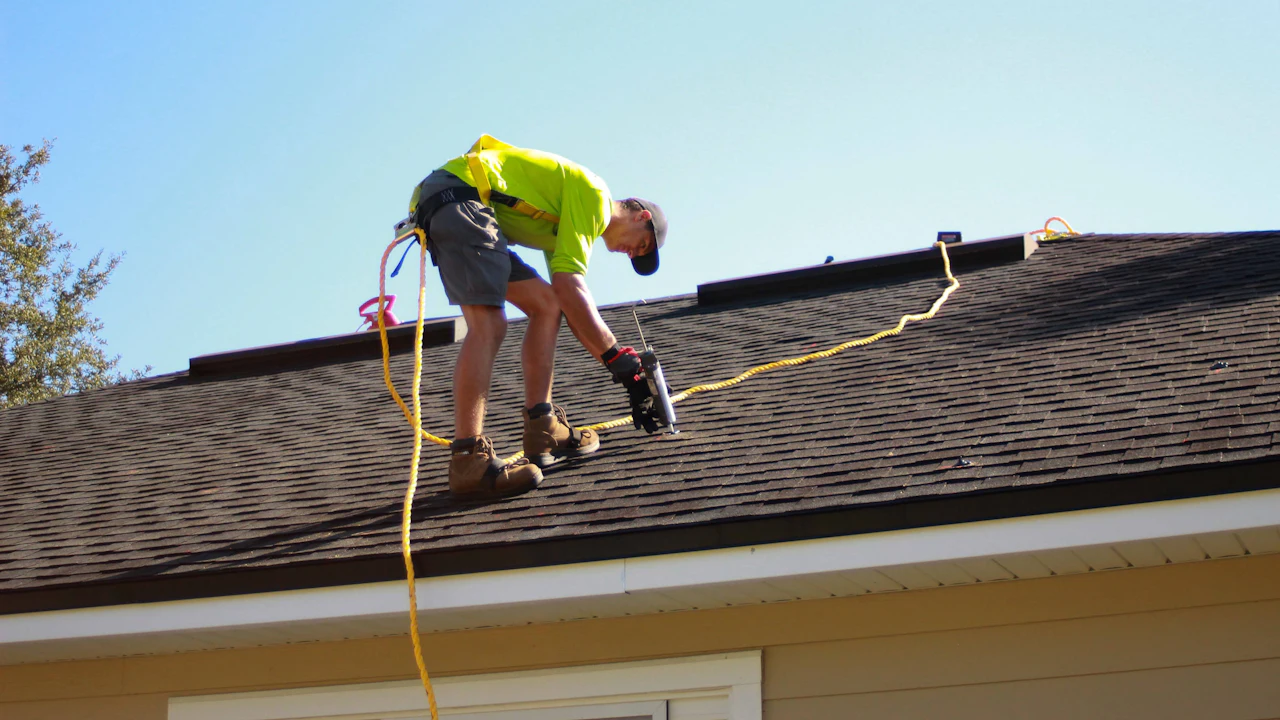
Every slope and every penetration, before anything is touched. You see the split in the rubber yourself rather than take our word for it.
Shingles opened above and below the flange, old boot out, new one set under the course above, shingles woven back in. Sealant is a detail, never the repair.
Including the other boots, how much roof is left, and a written replacement number if the roof is near the end — at that visit, while the photos are fresh.
$700 for the first boot and $405 for each additional boot on the same visit, plus the diagnostic visit from $299 on a walkable roof. The visit fee is waived if the work turns into a roof replacement. Every price we charge is published on our pricing page.
You can, and it will probably stop the leak for a season. Then the caulk cracks along the same line the rubber did and the water runs in behind it where nobody can see it. If the same stain has come back twice, that is usually why. The boot is a part; it gets replaced.
Usually, yes. Water comes in at the pipe, lands on top of the ceiling, and runs along a joist or a wire until something stops it. A stain a few feet away is still the pipe. We check in the attic, where the track on the sheathing shows the real entry point.
No. A boot’s rubber gives out in ten to fifteen years while the shingles over it are rated for thirty, so a roof in good shape can leak at a penetration. If the roof genuinely is at the end of its life we will tell you that, show you why, and give you a written number — but we don’t turn one stain into a roof.
If they’re the same age, usually yes — they were installed together and they fail together. Four on one visit is $1,915 against $2,800 for four separate trips. We’ll show you the condition of each one and you decide.
Not by us — drywall and paint aren’t our trade, and we won’t pretend otherwise. We stop the water and photograph what caused it. Wait until the roof is fixed and the ceiling has dried fully before anyone paints it, or the stain comes back through.
We’ll get on the roof, check every penetration, go into the attic where we can, and tell you what it is and what it costs before we do anything. If it’s a repair, we’ll tell you it’s a repair.
Roofing per square, the repair book, the gutter minimum. Our price card →
Where the chimney meets the roof, and why it’s a bigger job. Chimney leaks →
Boot, flange, flashing, drip edge — one labelled diagram. Roof anatomy →
The signs that actually warrant a replacement. Signs you need a new roof →
Rather talk to someone? Contact us — we answer our own phone.
We photograph every slope and every penetration, tell you what it is, and give you the price before we do anything. If the roof is near the end, we’ll say so.
