
A gutter guard is a screen or mesh over the gutter that lets water in and keeps debris out. A good one turns twice-a-year ladder work into an occasional rinse — and keeps the gutter flowing in October, when a week of wet leaves can choke a run right before freeze-up.
What guards don’t do: fix undersized gutters, fix bad pitch, or make maintenance disappear forever. Anyone promising “never touch your gutters again” is selling the ladder, not the physics. We’ll tell you which runs on your house would actually benefit — and which wouldn’t.
A blocked run doesn’t hold the water back. It just picks a worse place to put it.
Water sheets over the lip and lands in the backfill your basement walls sit in.
A gutter that stays full keeps the fascia board wet — and wet wood lets go of the hangers.
Standing water in a clogged run freezes first and feeds ice dams — the winter problem that starts in the fall.
Saturated debris plus ice is the load that tears runs off the house in a January thaw.
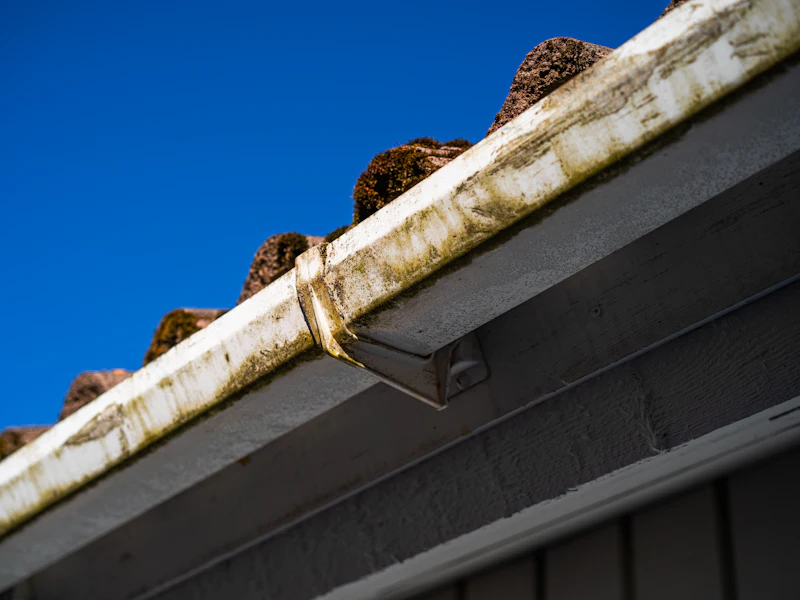
Three common types. One we recommend, one that’s situational, one we’d talk you out of.
Fine stainless mesh on a rigid frame. Stops leaves, pine needles, and shingle grit while passing heavy rain. The one we install — it earns its cost under trees.
Aluminum sheet with punched holes. Stops big leaves, passes needles and grit. Cheaper, and fine on runs with only large-leaf trees overhead.
Sit inside the gutter and catch debris in the run — then hold moisture against it and freeze solid in winter. We don’t install these.

A guard on an undersized, badly pitched run is a lid on a problem. The gutter has to work first.
We check the run before quoting a guard — if the gutter itself is failing, seamless replacement is the honest recommendation.
Guards go on clear, re-pitched, re-secured runs — sealing debris inside a gutter is how you buy a hidden clog.
Set under the drip line so water follows the mesh in — not screwed through shingles, which voids more than it protects.
A run that goes into winter full of wet leaves freezes into a block at the eave — right where ice dams form. Guards installed before leaf-drop mean the gutter enters winter empty and draining.
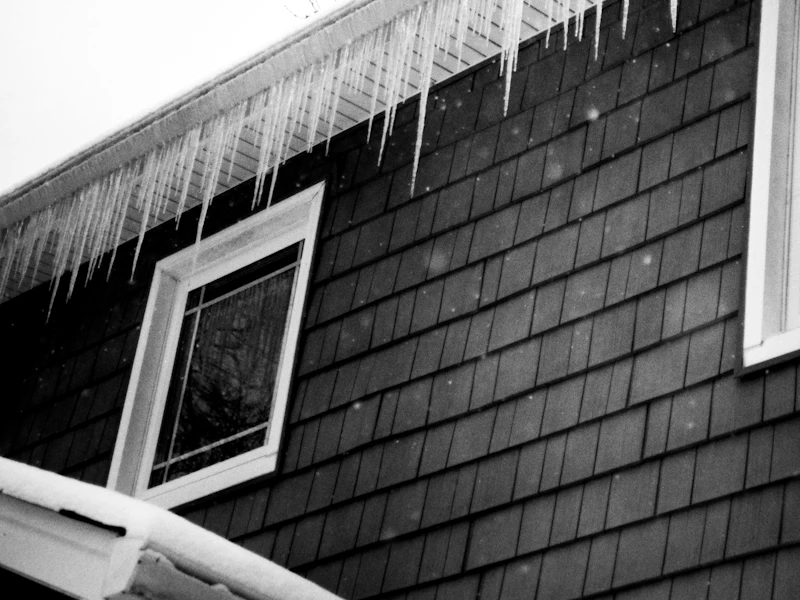
Already seeing icicle curtains every winter? That’s usually an attic problem, not a gutter problem — here’s why ice dams really form.
We look at the trees, the runs, and the pitch, then tell you in writing which runs would benefit from guards — and which are fine without them. If the answer is “skip it,” that’s what the paper will say.
Gutters are part of the Free 27-Point Roof Report — and the Walk-Away Promise applies: if everything’s fine, we hand you the file and leave. No follow-up calls unless you ask for one. See all 27 points →
No — and be wary of anyone who says otherwise. Good micro-mesh cuts cleaning from a ladder job twice a year to an occasional rinse and a visual check. Debris still settles on top and washes off; it just stays out of the run.
For most Wyoming County homes, rigid micro-mesh — it stops needles and shingle grit, handles heavy rain, and doesn’t collapse under snow. Perforated screens are a budget option under large-leaf trees only. Foam and brush inserts hold moisture and freeze; we don’t install them.
Usually, yes, if the runs are sound, sized right, and pitched right. We clean, reseal, and re-secure the run first, then fit the guard. If the gutter itself is failing, we’ll tell you before you spend money capping it.
No. Ice dams come from attic heat melting snow that refreezes at the cold eave. Guards neither cause nor cure that. What they do is keep the run clear, so meltwater has somewhere to drain instead of pooling and freezing at the edge.
Micro-mesh passes heavy rain when it’s installed at the right angle under the drip line. In the hardest bursts a little water can overshoot — the same is true of an open gutter. Sizing the gutter and downspouts right matters more than the guard.
We’ll check your runs, your trees, and your pitch — and put an honest answer in writing, guards or no guards.
