Home / Gutters
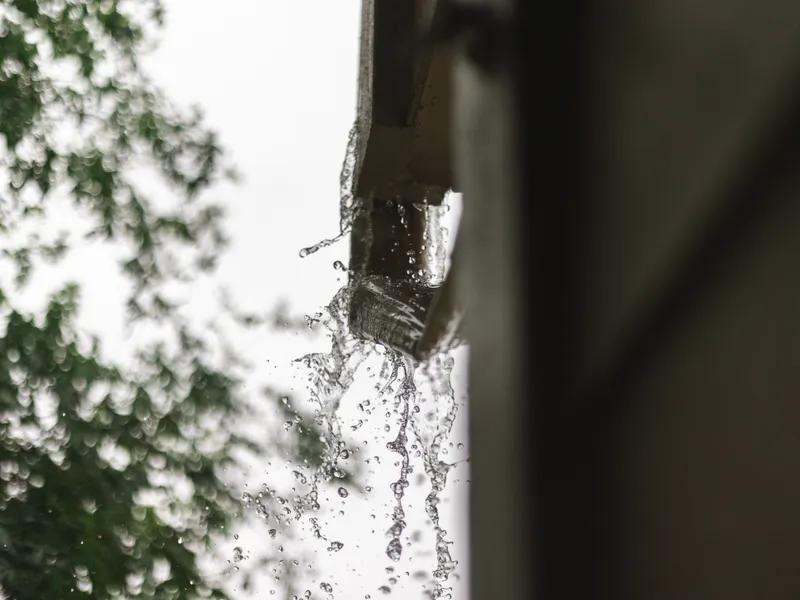
A roof sheds thousands of gallons a year — and it all lands somewhere. We size the gutters and downspouts to the roof that feeds them, so the water ends up away from your foundation instead of in your basement.
Most gutter problems aren’t gutter problems. They’re sizing, pitch, and downspout problems — installed by the foot instead of by the math.
One inch of rain on 1,000 square feet of roof is roughly 600 gallons. The gutter run below has to carry all of it.
We measure the roof planes draining to each run, then size 5-inch or 6-inch K-style to match — not whatever’s on the truck.
An oversized gutter with too few downspouts still overflows. Count and placement come from the roof, not the corners of the house.
Runs are pitched toward the downspout so water moves instead of standing — standing water is ice waiting for December.
Hidden hangers fastened into solid fascia, spaced tighter than the sunbelt standard — snow load and ice tear off gutters that were hung by the minimum.
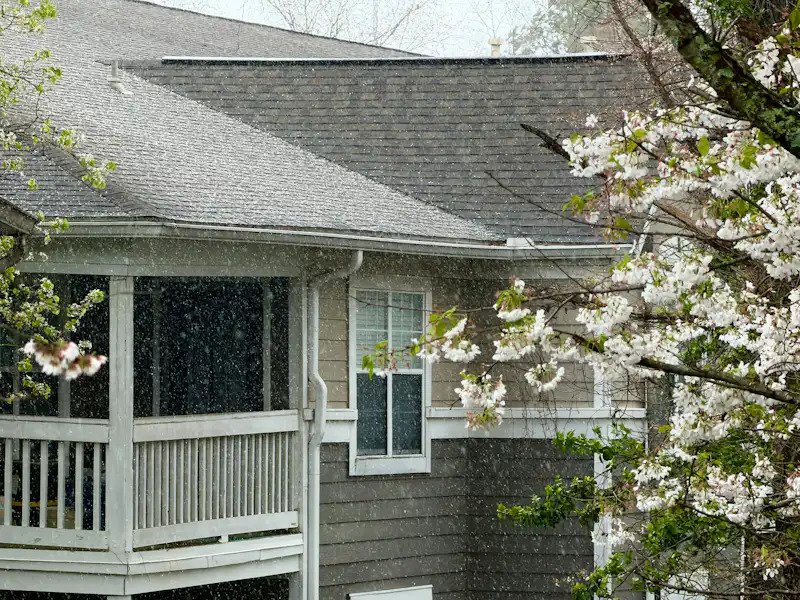

In Wyoming County, overflow doesn’t just stain siding. It dumps snowmelt at the foundation, rots fascia, floods basements, and feeds ice dams at the eaves.
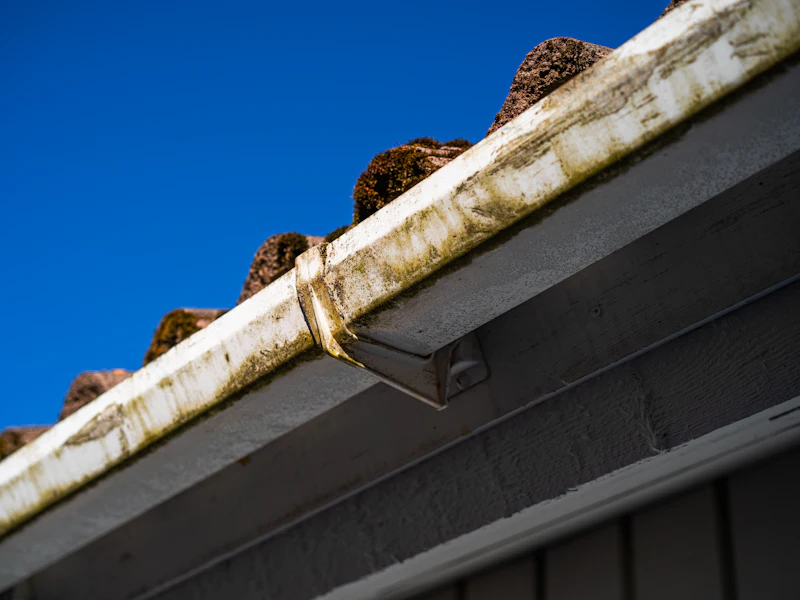
We walk the eaves, roof to downspout, and photograph what we find — clogs, bad pitch, pulled hangers, failed corners.
Roof area, gutter size, downspout count — written down, priced, and explained before anything comes off the house.
Seamless runs, pitched right, fastened into solid fascia. Rotten fascia gets flagged, not covered.
Downspouts and extensions send the runoff away from the foundation — and we check the flow before we call it done.
Bent or torn gutters after a windstorm? See storm & hail damage →
On storm claims we inspect, photograph, document, and provide an itemized estimate — and can meet your adjuster. Your insurer decides coverage.
New seamless gutters, guards, or a run that’s pulling loose — we’ll take a look, photograph it, and put the answer in writing. No pressure either way.
We hang gutters across Wyoming County — from homes in Attica to Warsaw’s older housing stock and new builds around Batavia.
Gutters are part of the Free 27-Point Roof Report — and the Walk-Away Promise applies: if everything’s fine, we hand you the file and leave. No follow-up calls unless you ask for one. See all 27 points →
Seamless gutters are rolled on-site in one continuous run, so the only joints are at the corners — which is where sectional gutters leak. Fewer seams, fewer failure points, longer life.
Yes — a roof sheds thousands of gallons a year, and it all lands somewhere. Undersized or clogged gutters dump that water at the foundation, which is how basements get wet and fascia rots. We size gutters and downspouts to the roof that feeds them.
It depends on the roof above the run — area, pitch, and how many planes drain into it. Steep or large roofs usually earn 6-inch; many single-story runs are fine at 5-inch. We measure and put the answer in the written scope.
When the roof goes on. New gutters install cleanest with new drip edge and fascia work, and it saves a second setup charge. If your gutters are failing now, though, waiting for a roof you don’t need yet just moves the water damage indoors.
They don’t cause them (ice dams start with attic heat), but clogged or flat-pitched gutters hold water and ice at the eave and make the damage worse. The fix for the dam itself starts in the attic; see our ice dams page.
Yes — we clear clogs, reseal corners, reset pitch, and re-secure loose runs, and we’ll tell you plainly when a tune-up will hold and when the run is past saving.
We measure the roof, check every run, and put the answer in writing — repair, replace, or “you’re good for now.”